Unlocking Rwanda’s Industrial Growth Through Nuclear Energy
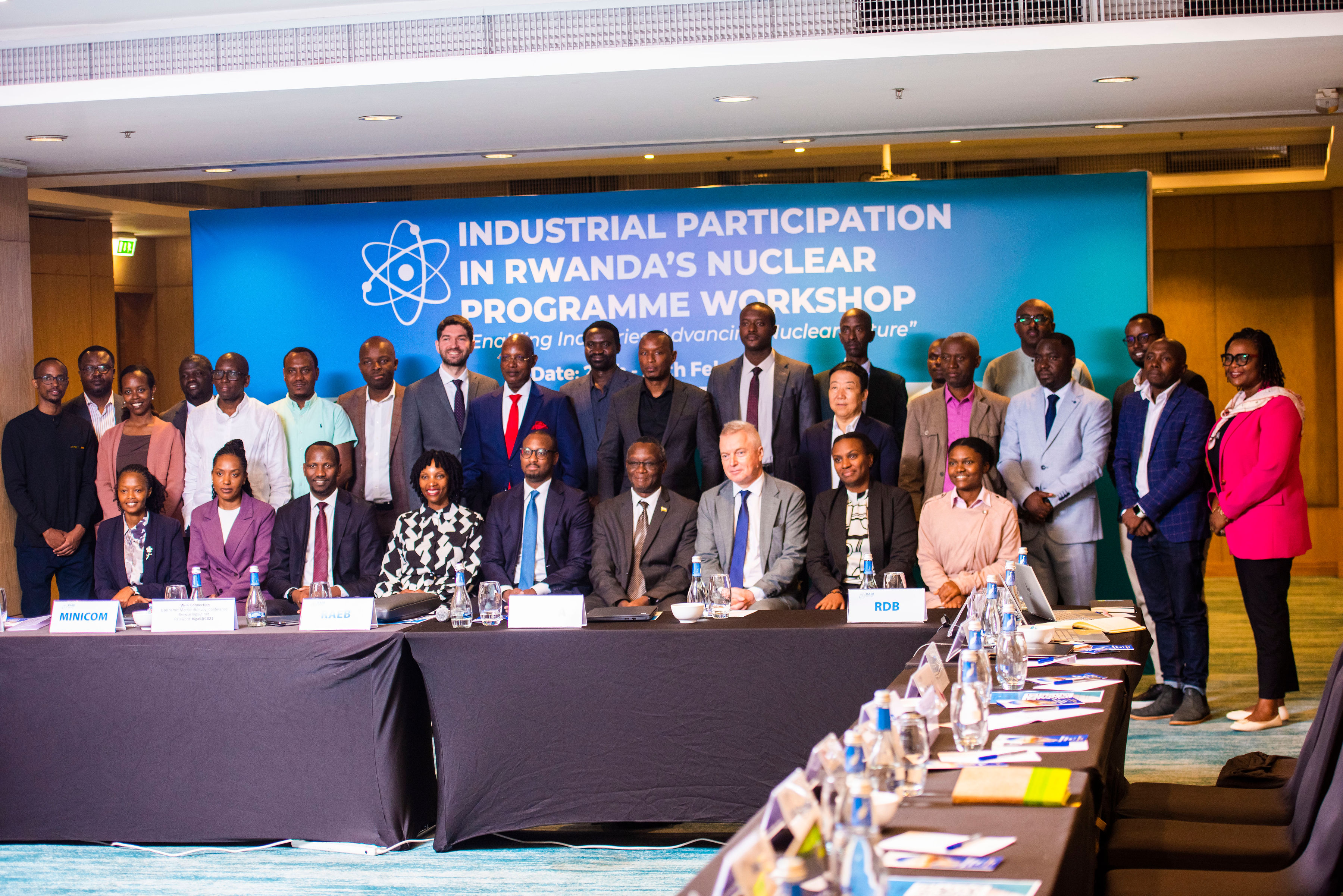
Kigali –February 26, Rwanda’s pursuit of nuclear energy is expected to serve not only as a reliable and clean source of baseload electricity but also as a catalyst for industrial development, technological advancement, skills upgrading, and socioeconomic transformation.
Rwanda Atomic Energy Board (RAEB) in collaboration with the United Nations Economic Commission for Africa (UNECA) and the Ministry of Trade and Industry conducted a two-day Consultative and Awareness-Raising Workshop on Industrial Participation in Rwanda’s Nuclear Power Programme, on February 25th and 26th.
This workshop brought together representatives from government institutions, private sector organisations, academia, and development partners to explore how Rwanda’s industries, SMEs, engineers, and technicians can position themselves to participate in the nuclear value chain –from construction and civil works, to logistics, manufacturing, engineering services, and long-term operations.
The discussions focused on strengthening stakeholder understanding of nuclear sector and industrial localization by highlighting opportunities across the entire value chain and supply chain of nuclear energy lifecyle, assessing the readiness of domestic industries to contribute to the programme and gaps that must be addressed to ensure that Rwandan firms can meet the high safety, quality, and regulatory standards required in nuclear projects.
During the opening ceremony of the workshop, Dr Fidele Ndahayo, CEO of the Rwanda Atomic Energy Board, stressed that as Rwanda is exploring technologies such as Small Modular Reactors (SMRs), which offer scalability, enhanced safety features, and opportunities for phased deployment, and this represents a unique opportunity for the country’s industrial ecosystem.
“Our ambition is not only to consume advanced technology but to internalize knowledge, build capacity, and participate in high-value segments of global supply chains. And nuclear sector offers that opportunity,” he said.
Speaking on behalf of the Executive Secretary of ECA, Mr. Andrew Mold, Director of ECA in Eastern Africa, noted that Rwanda’s decision to explore nuclear energy is “a bold and forward‑looking initiative that aligns with the region’s broader industrialization agenda.”
He added that nuclear technologies presents an unprecedented opportunity for developing countries seeking affordable, reliable baseload energy. “Nuclear energy has the potential to serve as a catalyst for revitalizing industrial capacity across the region. For Rwanda, this programme can support a more resilient, competitive, and diversified economy. If designed carefully, such a major capital investment can stimulate industrial development, expand supply chains, and generate high‑skilled employment,” he said.
In his remarks, Mr Antoine Kajangwe, the Permanent Secretary in the Ministry of Trade and Industry, emphasized that Industrial localization cannot be an afterthought but must be designed from the outset.
“As the Ministry of Trade and Industry, our responsibility is to ensure that as this programme progresses, it creates meaningful and practical opportunities for local industries. Localization must move beyond a concept and become a deliberate strategy that strengthens Rwandan businesses.”
Nuclear projects are among the most complex infrastructure undertakings in the world, requiring a wide range of specialised inputs across construction, manufacturing, engineering, and services. This complexity creates opportunities for domestic companies to integrate into high-value supply chains and progressively strengthen their capabilities.
As Rwanda moves forward in its nuclear journey, the integration of local industry will remain a key priority. By building national capabilities and strengthening domestic supply chains, the nuclear power programme has the potential to contribute not only to energy security but also to the country’s long-term development ambitions.