Rwanda Trains First Responders to Nuclear and Radiological Emergencies
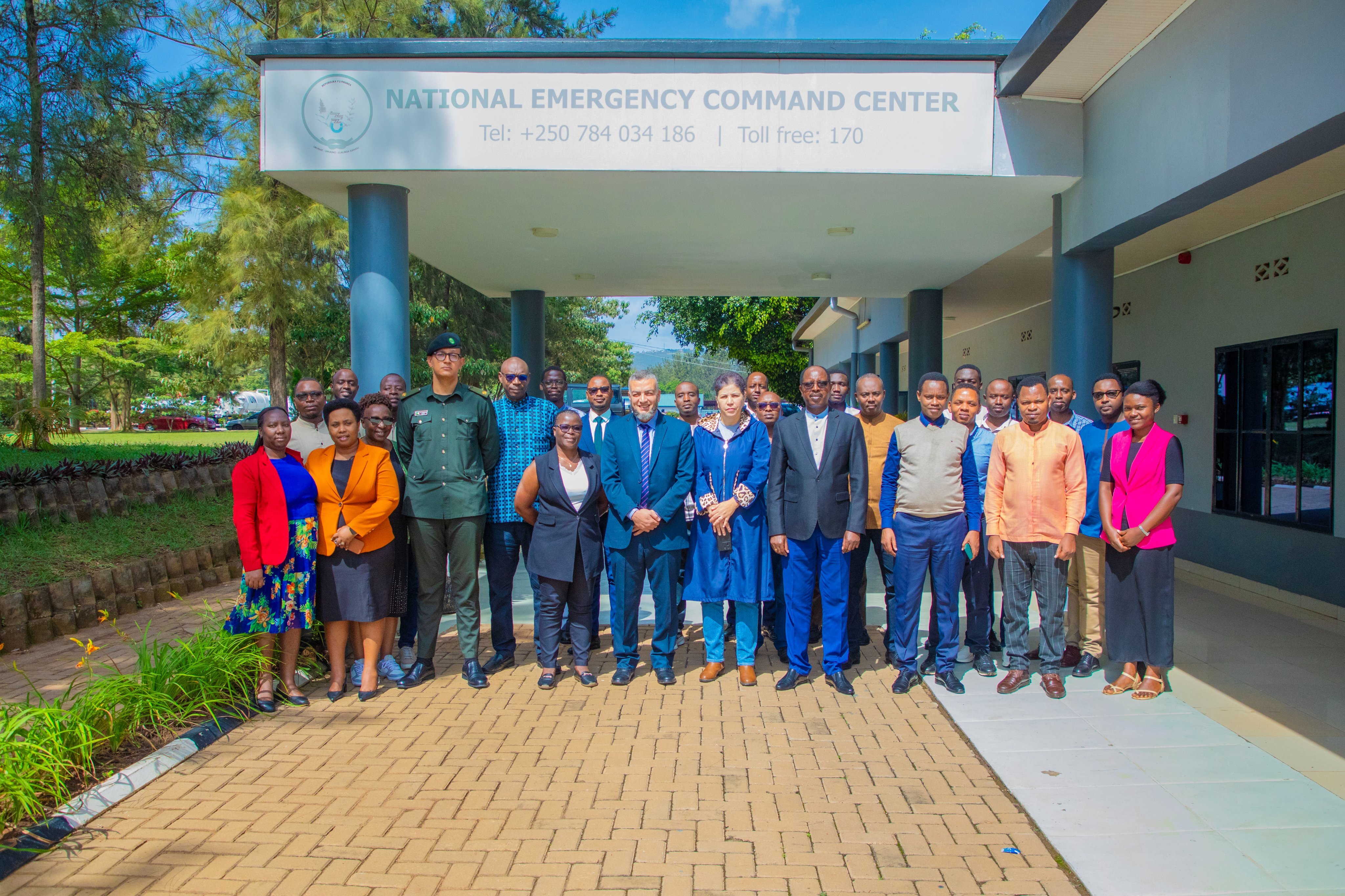
Participants
Rwanda conducted a five-day national training and field simulation exercise for First Responders to Radiological Emergencies to enhance preparedness as the country advances in nuclear energy programme development.
The training, held from 15th to 19th December, was organized by the Ministry in charge of Emergency Management in collaboration with Rwanda Utility and Regulation Authority (RURA) and the International Atomic Energy Agency (IAEA).
As an IAEA expert, I would describe this radiological emergency response training as both highly effective and strategically important for Rwanda.
This strategic course was designed in a manner that combines theoretical foundations with practical hands-on exercises, including tabletop scenarios and a full-scale field exercise. This approach allowed participants to move beyond concepts and apply procedures in realistic conditions.
It equipped first responders with critical technical and coordination skills, strengthening inter-agency collaboration and supporting the development of a National Radiological Emergency Response Manual, reaffirming Rwanda’s commitment to safety, resilience and international cooperation in the nuclear sector.
During the opening of the training, ACP Egide Mugwiza emphasized the importance of aligning technological advancement with strong preparedness systems.
“As Rwanda expands the use of nuclear and radiological technologies across energy, healthcare, agriculture, and industry, it is essential that our preparedness and response capacities advance at the same pace. First responders are central to national safety, and their ability to rapidly assess hazards, protect the public, and coordinate effectively is critical to minimizing risk and strengthening resilience,” he stated.

Simulation exercise
Khadija Bendam, Head of Nuclear and Radiological Safety and Security Audits, CNESTEN, observed that the level of engagement, professionalism, and inter-agency cooperation demonstrated by the participants was particularly encouraging and it reflects a strong national commitment to safety, coordination, and operational readiness.
“This means that Rwanda is not only focusing on the technological or policy aspects of nuclear development, but also on protecting people, the environment, and infrastructure. It strengthens public confidence, supports regulatory credibility, and lays a solid foundation for future activities involving radiation sources, nuclear applications, or potential energy ambitions,” she added.
To conclude the training, first responders engaged in a field exercise which tested real-time national response coordination under realistic emergency conditions, with a focus on command, control, and inter-agency communication. It brought together different security, regulatory and medical personnel in charge of emergency response.
According to Remy Wilson Bana, Division Manager for Nuclear and Radiation Safety, RURA, the exercise involved demonstrating capacity in hazard assessment, area control, radiation monitoring, medical response, evidence management, and public communication.
“We started with a small group and we will provide them with tools and equipment of radiation safety and response. We are also preparing a full-scale training course next year to strengthen the country’s nuclear and radiological emergency preparedness,” he added.

IAEA, MINEMA hand over certificates -photo courtesy
Emergency preparedness and response are fundamental pillars of any peaceful nuclear or radiological programme. This training highlights the country’s commitment to align with IAEA safety standards and international best practices.”