Rwanda advances nuclear power readiness with IAEA INIR Mission Phase 1
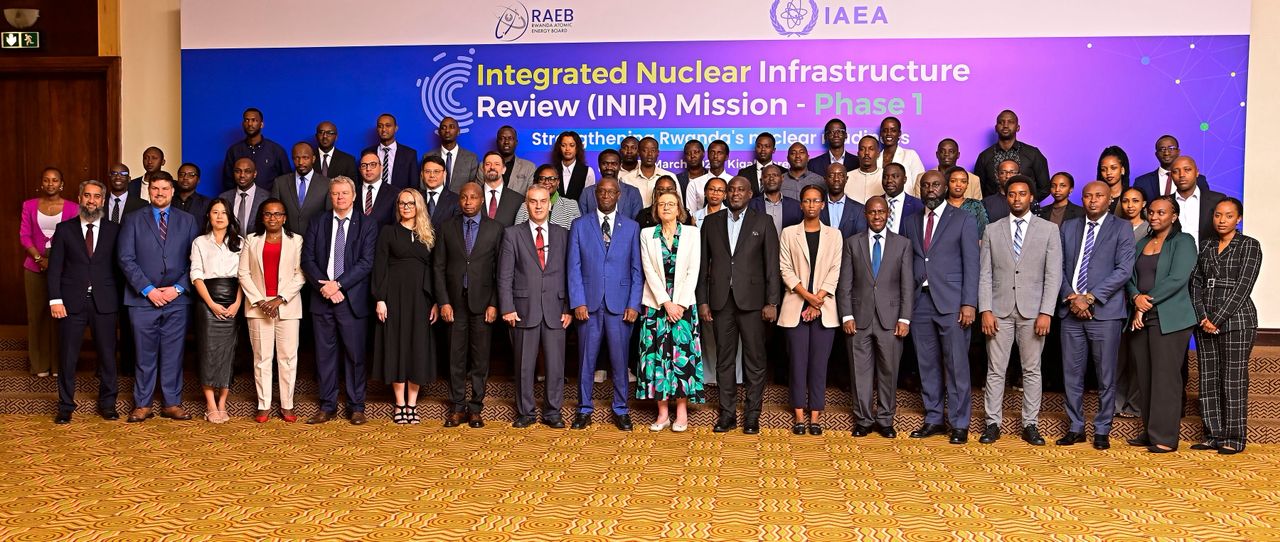
Kigali, March 2 – Rwanda Atomic Energy Board (RAEB) is hosting the International Atomic Energy Agency’s (IAEA) Integrated Nuclear Infrastructure Review (INIR) Mission first phase from 2nd to 9th March 2026, marking a significant milestone in Rwanda’s journey toward establishing a safe, secure, and sustainable nuclear power programme.
The INIR mission convenes international experts and national stakeholders to conduct an expert assessment of Rwanda’s national readiness across the 19 nuclear infrastructure areas. Over the course of the week-long mission, the team reviews progress made in establishing essential elements such as policy and strategy, legal and regulatory frameworks, safety and security systems, human resource development, radioactive waste management, and stakeholder engagement.
RAEB continues to lead preparations for the peaceful introduction of nuclear energy into Rwanda’s energy mix, working closely with national and international partners and the IAEA to ensure that development efforts align with international best practice. This review mission is designed to strengthen Rwanda’s institutional foundations and support the country’s efforts toward the implementation of nuclear power programme.
During the opening ceremony of the mission, Ms. Aline Des Cloizeaux, Director of Nuclear Power Division in the Department of Nuclear Energy, IAEA, said the agency stands ready to support Rwanda’s endeavor to integrate nuclear energy into its energy mix to meet the projected growth in electricity demand over the coming years and advance clean energy transition.
The mission is part of a global framework that supports newcomer countries in safely and responsibly building nuclear energy capabilities.
Rwanda’s expanding energy needs driven by population growth, industrialisation goals, and the pursuit of universal electricity access require diversified and reliable power sources. Nuclear energy, especially through technologies such as Small Modular Reactors (SMRs), presents a long-term solution to complement existing hydropower, solar, and methane sources of energy, and support the country’s Vision 2050.
In his remarks, Dr Fidele Ndahayo, CEO of RAEB, said that the decision to host the INIR Mission reflects the country’s commitment to uphold international standards and ensure transparency in the pursuit of nuclear energy for socioeconomic development.
“Nuclear power is not merely a scientific endeavor. It is a strategic pillar of our future. As we strive to position our nation as a hub for trade, investment, and innovation, we recognize that reliable and clean electricity is the bedrock of industrial transformation.”
As the INIR mission progresses, RAEB remains committed to leveraging the mission’s findings and recommendations to inform subsequent planning and implementation phases, ensuring that Rwanda’s nuclear ambitions progress with safety, sustainability, and national ownership as a foundation.