Inaugural Joint Discussion on Applying Nuclear Science to Agriculture in Rwanda

RAEB and FAO representatives
By Eng. Eric Ndayishimiye, Research Reactor Division
On 19 November 2025, the Rwanda Atomic Energy Board (RAEB) joined an introductory meeting with the Food and Agriculture Organization of the United Nations (FAO) at FAO Rwanda Headquarters. The session brought together FAO Representative Ms. Nomathemba Mhlanga and Mr. Joseph Niyomukiza from the World Food Forum–Rwanda Chapter.
This inaugural meeting aimed at introducing participants to the current nuclear food and agriculture programmes anchored in the planned Center for Nuclear Science and Technology (CNST), exploring possible areas of the cooperation under FAO’s technical assistance framework, and identify future coordination mechanisms and capacity building opportunities.
The joint discussions explored collaborative pathways and outlined the way forward for initiatives.
Applications of nuclear science and technology are making significant contributions to food and agriculture worldwide. Through nuclear techniques, countries are enhancing food production, safety, pest control, and resource management. For example; in Food production, more than 3,400 mutant crop varieties have been developed globally through mutation breeding, improving yields and resilience. In Food safety; irradiation technologies help eliminate pests and pathogens, extending shelf life and reducing post-harvest losses.
In Pest control; nuclear-based techniques are successfully eradicating or controlling harmful species such as the Mediterranean fruit fly, tsetse fly, and screw-worm fly in different regions. For Resource management; radioactive isotopes like N‑15 and P‑32 are used to measure fertilizer efficiency, water use, and soil erosion, enabling farmers to optimize inputs and increase productivity.
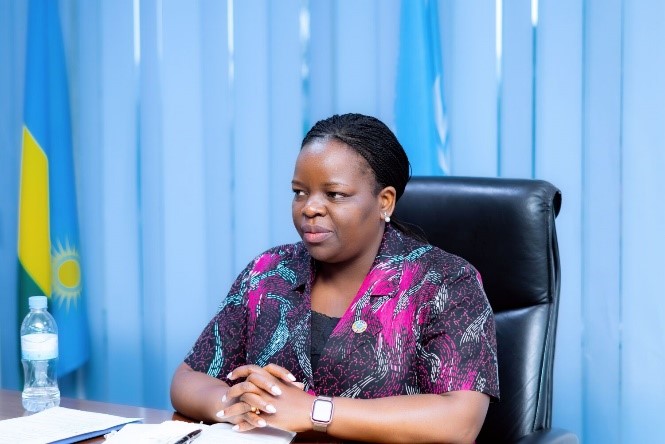
Ms. Nomathemba Mhlanga, FAO-Rwanda representative
The meeting successfully initiated collaboration between RAEB and FAO, confirming mutual interest in applying nuclear science to strengthen Rwanda’s food and agriculture sector. It served as an introductory engagement that sets the stage for future discussions on areas of collaboration.
--
About the Center for Nuclear Science and Technology (CNST)
The Center for Nuclear Science and Technology (CNST) in Rwanda is a flagship initiative designed to advance peaceful applications of nuclear technology in health, agriculture, industry, and research. Designed as a hub for research, training, and innovation, the CNST will support applications in agriculture, health, industry, and environmental management. It will improve healthcare by enabling local production of radiopharmaceuticals and advanced cancer diagnostics and treatment; boost agricultural productivity and food security through nuclear-assisted crop improvement and soil analysis; support industrial growth through modern testing and irradiation services and build a skilled workforce through training and research facilities.
About RAEB
The Rwanda Atomic Energy Board (RAEB) is a government institution with a mission to promote peaceful use of nuclear energy for sustainable socio-economic development in key sectors of agriculture, health, electricity generation, pharmaceuticals and biotechnology, industry, environment, geology and mining.
RAEB projects are aligned with Vision 2050 by ensuring that nuclear science and technology is applied in Rwanda to drive universal electrification which is critical to the country’s industrialization ambition, enhance healthcare through nuclear medicine, and improve agricultural productivity, among others.